Tuesday, February 28, 2006

Our National Parks


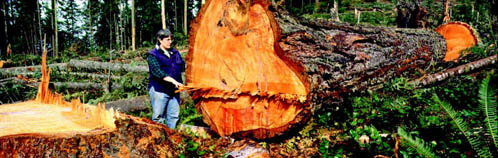
Any fool can destroy trees. They cannot run away; and if they could, they would still be destroyed,—chased and hunted down as long as fun or a dollar could be got out of their bark hides, branching horns, or magnificent bole backbones. Few that fell trees plant them; nor would planting avail much towards getting back anything like the noble primeval forests. During a man’s life only saplings can be grown, in the place of the old trees-tens of centuries old-that have been destroyed. It took more than three thousand years to make some of the trees in these Western woods,—trees that are still standing in perfect strength and beauty, waving and singing in the mighty forests of the Sierra. Through all the wonderful, eventful centuries since Christ’s time-and long before that- God has cared for these trees, saved them from drought, disease, avalanches, and a thousand straining, leveling tempests and floods; but he cannot save them from fools,—only Uncle Sam can do that.

- John Muir

Monday, February 27, 2006

Save our forests


President Bush's proposed 2007 budget includes a legislative request to allow the U.S. Forest Service and Bureau of Land Management to sell off land in national forests, grasslands and scenic areas . . . This is a list of the known areas proposed for sale:

ALABAMA: 3,220 acres in the Talladega, Bankhead and Conecuh national forests.

ALASKA: 99 acres in the Tongass and Chugach national forests.

ARIZONA: 1,030 acres in the Apache-Sitgreaves and Kaibab national forests.

ARKANSAS: 3,612 acres in the Ouachita and Ozark national forests.

CALIFORNIA: 79,362 acres in the Angeles, San Bernardino, Sequoia, Sierra, Stanislaus, Eldorado, Tahoe, Plumas, Lassen, Trinity, Six Rivers, Shasta and Klamath national forests.

COLORADO: 21,572 acres in the Arapaho, Roosevelt, Gunnison, Uncompahgre, Pike, San Isabel, Rio Grande, San Juan and White River national forests and the Pawnee and Comanche national grasslands.

FLORIDA: 973 acres in the Ocala National Forest.

GEORGIA: 4,522 acres in the Chattahoochee and Oconee national forests.

IDAHO: 25,464 acres in the Clearwater, Coeur d'Alene, Kaniksu, Nez Perce, St. Joe, Boise, Caribou-Targhee, Payette and Sawtooth national forests and the Caribou-Targhee Curlew Grasslands.

ILLINOIS: 191 acres in the Shawnee National Forest.

INDIANA: 869 acres in the Hoosier National Forest.

KENTUCKY: 4,518 acres in the Daniel Boone National Forest.

LOUISIANA: 3,895 acres in the Kisatchie National Forest.

MICHIGAN: 5,880 acres in the Hiawatha and Ottawa national forests.

MINNESOTA: 2,622 acres in the Superior National Forest.

MISSISSIPPI: 7,503 acres in the Bienville, DeSoto, Holly Springs, Homochitto and Tomigbee national forests.

MISSOURI: 21,566 acres in the Mark Twain National Forest.

MONTANA: 13,948 acres in the Beaverhead, Bitterroot, Custer, Deerlodge, Flathead, Gallatin, Helena, Koot, Kootenai, Lewis & Clark and Lolo national forests.

NEBRASKA: 866 acres in the Nebraska National Forest and Oglala National Grasslands.

NEVADA: 2,146 acres in the Humbolt-Toiyabe National Forest.

NEW MEXICO: 7,447 acres in the Cibola and Lincoln national forests and the Kiowa National Grasslands.

NORTH CAROLINA: 9,828 acres in the Croatan, Nantahala, Pisgah and Uwharrie national forests.

OHIO: 420 acres in Wayne National Forest.

OKLAHOMA: 3,572 acres in Ouachita National Forest and Rita Blanca National Grasslands.

OREGON: 10,581 acres in the Deschutes, Fremont-Winema, Malheur, Mount Hood, Ochoco, Rogue River-Siskiyou, Siuslaw, Umatilla, Umpqua, Wallowa-Whitman and Williamette national forests, the Crooked River National Grasslands and the Columbia River Gorge National Scenic Area.

SOUTH CAROLINA: 4,665 acres in the Francis Marion and Sumter national forests.

SOUTH DAKOTA: 13,961 acres in the Black Hills National Forest and the Buffalo Gap and Ft. Pierre national grasslands.

TENNESSEE: 2,996 acres in the Cherokee National Forest.

TEXAS: 4,813 acres in the Angelina, Davy Crockett, Sabine and Sam Houston national forests and the Rita Blanca and Caddo-LBJ national grasslands.

UTAH: 5,998 acres in the Dixie, Fishlake, Manti-La Sal, Sawtooth, Uinta and Wasatch-Cache national forests.

VIRGINIA: 5,717 acres in the George Washington-Jefferson National Forest.

WASHINGTON: 7,516 acres in the Colville, Gifford Pinchot, Mt. Baker-Snoqualmie, Olympic, Wenatchee and Okanogan national forests and the Columbia River Gorge National Scenic Area.

WEST VIRGINIA: 4,836 acres in the Monongahela National Forest.

WISCONSIN: 80 acres in the Chequamegon-Nicolet National Forest.

WYOMING: 17,619 acres in the Black Hills, Medicine Bow and Bridger-Teton national forests and the Thunder Basin National Grasslands.

SOURCE: U.S. Forest Service

from the Daytona Beach News

Sunday, February 12, 2006

Letter from Gena

Dear Ones,

I was awake at a little after 4 yesterday morning when I heard what sounded like gun shots. They sounded far enough away for it to be safe to go to the window. I did. I couldn’t see anything. Then it was not just a few gun shots—if that’s what they were. It sounded like a gun battle. It went on for some time.

It sounded like a shoot out at OK Corral but then again, maybe it was something else. When it stopped, I went back to sleep.

This morning there’s a front page story on the gun battle. Fifteen “bandidos” armed with “metralhadoras” (when I found the meaning in my pocket dictionary, I laughed in disbelief)—machine guns, invaded a condominium building in a nearby neighborhood, took a young girl hostage (she was returning from a party), disarmed the security cameras, and robbed the girl’s apartment. They clearly intended to rob other apartments but within a few minutes an army of federal police were on the scene. That’s when the “troca de tiros” (gun battle) began. (The bandits let the hostage go at that point and she and security guys from the building ran for their lives.)

The bandits fled. Police searched seven hours for them. Most got away but they killed one hiding in some shrubbery and killed another who had hidden himself for five hours in a ventilation tube. The newspaper published photos of the bloody corpses.

All the apartment and condominium buildings have sentry boxes, booths with tinted glass—they’re built into the architecture—and staffed 24 hours a day. There are locked fences surrounding the buildings that the sentries must open for residents. When pizza is ordered, the delivery man doesn’t get into the building. The sentry telephones the resident who comes down for it. (Once some bandits did gain access to an apartment building by posing as doctors.)

When I go to the dentist, the door between the office and the waiting room is kept locked.There’s a security camera in the waiting. Inside, the dentist can see on her screen who’s in the waiting room and what’s happening.

“Security” is a huge industry in a country with such social injustice and extreme maldistribution of wealth as Brazil. There are more people working in “security” than are in the Brazilian military.

My friend Ana keeps saying, as watch television or look at a magazine cover, that she knows the mother of that film star or the brother of that singer.

“Brazil is a small country,” she explained.

“No,” I said. “Brazil is actually quite a large country.”

She laughed. “The middle class is small.”

How small? I asked.

The middle class and the very wealthy together make up maybe 10 percent of the population. Another 10 percent scraps by. But a good 80 percent of the people live in abject, grinding poverty. The other day, as we were walking through a Bon Preco (the Brazilian WalMart), she pointed out a thermos on sale for less than $1 which people could buy on a ten month installment plan—that is, paying less than a dime a month.

But everyone has a television. All those in the slums can see what is available and know that they have absolutely no possibility of obtaining these things unless they take them by force. (The less time I was here, I was walking down a street one morning listening to my Walkman. A kid ripped the Walkman out of my ears and took off.)

Last weekend a German tourist was shot and killed on the beach at 11 a.m. when he resisted the theft of his camera. (Obviously this letter isn’t for Nona. Tell her I’m fine, which I am. I don’t have a camera and I never walk around with a Walkman.) I go to a beach where there are lots of chair and coconut water venders who keep an eye on things as it’s very bad for their business if tourists get shot.

Stunned by the crime here, I told Ana that with the increasing disparity between rich and poor in the U.S., this could be what’s in store for us in the U.S.

She nodded: “We are you tomorrow.”

Here’s how it is in Sao Paulo: The very rich no longer travel on the streets of the city. They fly around in helicopters. All the buildings have helicopter pads on their roofs to accommodate them. The merely rich travel around in armored cars. There are many companies specializing in their manufacture.

Millions of children live on the streets. They’re a tribe: “Crianzas da Rua.” Their parents can’t feed them or house them. Or the kids run away from violence. Squads of police go out and kill many of the kids. This has been often documented; it’s not really hid. There are many of these street children who, by 10 years of age, have already killed five or six people. They know they themselves do not have long to live.

When the police went on strike in Salvador last year, Ana said, the middle class stayed at home, behind their locked fences, terrified. Poor people looted stores. (Ana was disgusted. She keeps expecting and hoping the poor will launch a revolution. “They don’t want to be citizens,” she said, scornfully. “They want to be consumers.”) Terezhina, a friend here, was in a nearby shopping center, Shopping Barra, during the strike. A shopper heard the looters had gone through another shopping area and were on their way to Shopping Barra. “The riff raff are coming,” she said to Terezhina, alarmed, “and my chauffeur hasn’t arrived yet!”

With such inequality of wealth, the middle class can have all kinds of services from the poor at extremely low wages. Everyone in the middle class has a full-time maid. Ana’s maid, Teresa, cooks the main meal at mid-day and then makes a soup for the light evening meal. She washes our clothes and irons them. (I almost never iron my clothes.) Cleans the apartment and washes the dishes. Can you imagine how much of your time is freed up, how much easier your life is, when someone is taking care of all the domestic labor?

There are four men who work in this building. (All the buildings are named. I live in Edificio Christiana.) They are the guards, opening and locking doors and gates. They carry in packages and—when I arrived—suitcases. They wash all the cars in the garage regularly!

I can not tell you how weird it is to walk around the city and see every single car spotlessly clean. I mean, it is unbelievably weird.

Walking conditions around the city are horrible. Because the poor walk. The rich have cars, spotlessly clean. There’s little sidewalk space and often it’s taken up by parked cars or trash barrels so you’re forced to step into the street where cars whiz by at arrogant speeds. There’s a high rate of traffic deaths. (Believe me, I am super-vigilant when I walk.)

At crossings, cars have preference over pedestrians. It’s also so strange for me to see pedestrians stop humbly to let a car take precedence.

All of these details build in me a horror at how so many are living here and a great sense of foreboding, knowing what can come to the U.S. as more and more people hang on with their fingernails to the middle class they imagined they’d always belong to but find themselves slipping from and the gap between the have nots, the haves and—what George Bush calls his own base of support, “the “have mores,” widens.

A more cheerful letter next time. In the meantime, do demonstrate as much as you can. I must do more to resist the growing fascism in our country when I return.

Love, Gena